


 H. pylori Breath Test – preparation, results and testing options
£125.00


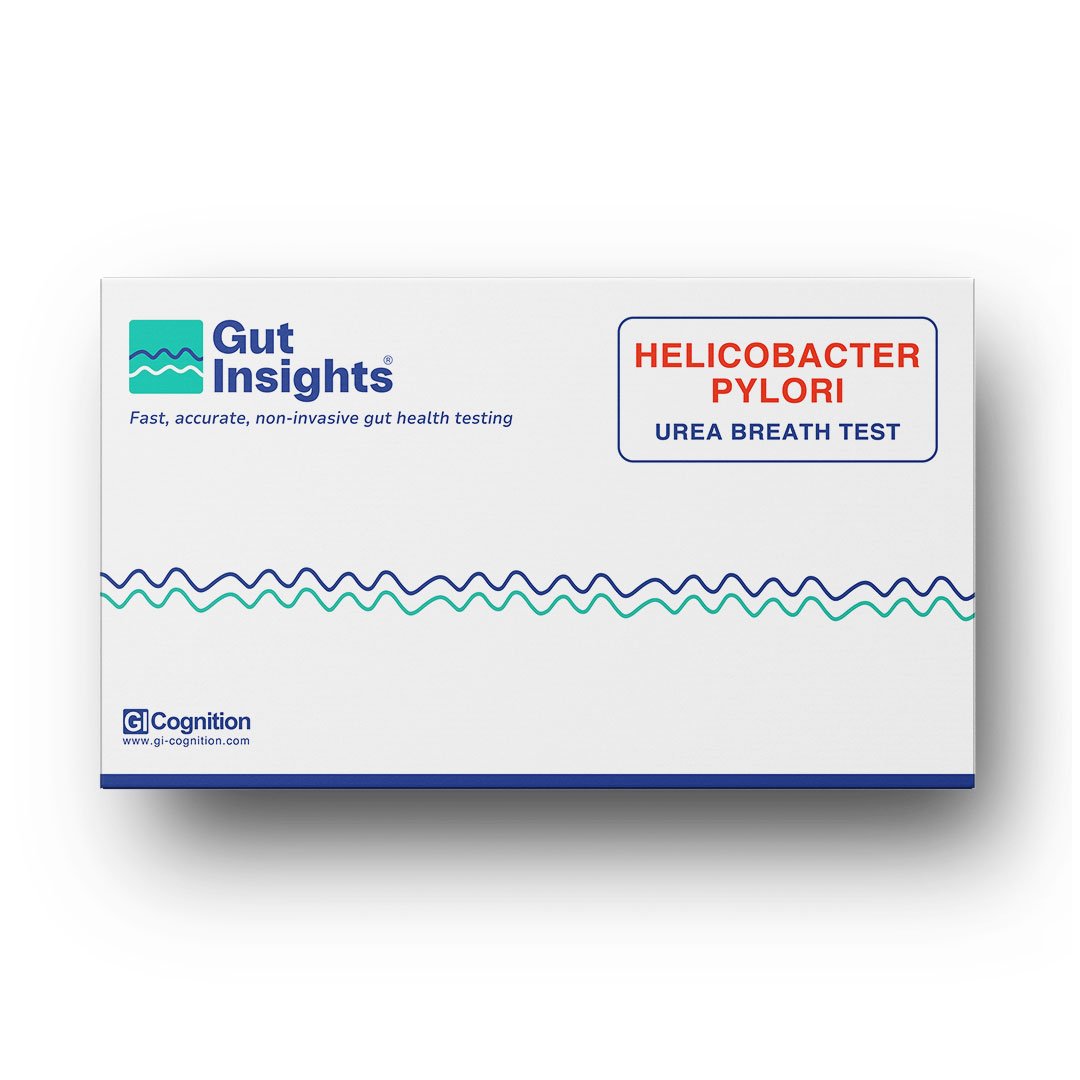
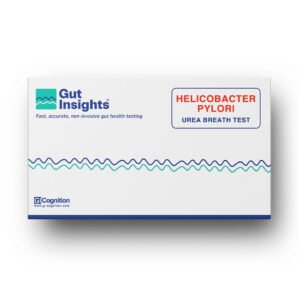
A carbon-13 urea breath test checks for an active Helicobacter pylori infection in the stomach. This page explains how testing works, how to prepare, what the results mean and when a different investigation may be needed.
A clinician can assess your symptoms and advise whether a breath test, stool test or another investigation is appropriate. Your GP can also arrange suitable tests through the NHS. NHS information

£125.00

H. pylori is a bacterium that can live in the stomach lining. Many infected people have no symptoms. In some people it contributes to inflammation and stomach or duodenal ulcers. Indigestion has several possible causes, so symptoms alone cannot establish whether H. pylori is present.
You provide a baseline breath sample, drink a preparation containing carbon-13-labelled urea, then provide another sample. If H. pylori is present, its urease enzyme breaks down the urea and labelled carbon dioxide appears in your breath. The laboratory compares the samples. It measures the change in labelled carbon, not simply the total amount of carbon dioxide you breathe out.
Carbon-13 is non-radioactive. With Helicobacter Test INFAI, the second collection is 30 minutes after the urea drink. Follow the instructions for the particular preparation prescribed. INFAI patient leaflet
Your clinician may recommend testing as part of an assessment of ongoing indigestion or suspected peptic ulcer disease, or to check whether treatment has cleared a previously diagnosed infection. Testing is selected according to your history, medicines and symptoms; a breath test does not replace endoscopy when that investigation is indicated. NICE CG184
The most suitable test depends on why you are being tested and whether you need an examination of the stomach as well. NICE includes carbon-13 breath testing and stool antigen testing among its initial testing options; it also allows laboratory antibody testing where local performance has been validated.
| Comparison | Carbon-13 urea breath test | Laboratory stool antigen test | Rapid home stool cassette | Blood antibody test | Endoscopy with biopsy |
|---|---|---|---|---|---|
| How it is done | Breath samples before and after a drink; INFAI uses a 30-minute interval. | A small stool sample is sent or delivered to a laboratory. | A stool sample is tested with a home kit. | A blood sample is analysed. | A camera examines the upper digestive tract; tissue samples are tested. |
| What it detects | Active H. pylori infection. | Active H. pylori infection. | Intended to detect H. pylori antigen; performance is product-dependent. | Antibodies, which can reflect current or past infection. | Biopsy testing can detect infection; the examination also assesses the lining. |
| After treatment | NICE CG184 recommends carbon-13 breath testing when re-testing is indicated. | Validated tests are used for follow-up; see the guidance note below. | Do not use as the sole confirmation that treatment worked without clinical advice. | Unsuitable for confirming eradication: antibodies can persist. | May be used if an endoscopy is needed for another clinical reason. |
| UK guidance | Included in NICE initial-testing guidance. | Included in NICE initial-testing guidance. | NICE CG184 does not specifically endorse consumer self-test cassettes. | Only laboratory tests with locally validated performance. | Used where endoscopy is clinically indicated. |
| Preparation | Medicine washout; fasting depends on the preparation. INFAI specifies 6 hours. | Medicine washout; follow the laboratory’s collection instructions. | Follow product instructions and ask about interfering medicines. | Usually no special preparation. | Fasting and medicine instructions from the endoscopy unit. |
| Invasive? | No. | No. | No. | Requires a needle. | Yes. |
| Main limitation | Medicines and incorrect preparation can affect results; product suitability matters. | Collection, storage and delivery affect sample quality. | Brand, handling and interpretation can affect reliability. | Cannot reliably distinguish past from current infection. | An invasive procedure, not routinely necessary just to test everyone for H. pylori. |
| Access | Clinical services, including NHS pathways where available. | GP/NHS pathways and private laboratories. | Pharmacies and online suppliers; check the specific kit’s intended use. | GP or private laboratory when clinically appropriate. | Hospital or specialist service. |
Guidance note: NICE CG184 recommends carbon-13 breath testing for re-testing. Its statement about insufficient evidence for stool tests to confirm eradication refers to evidence reviewed in 2004. WGO guidance also supports validated stool tests after treatment. A laboratory stool test and a consumer cassette should not be assumed interchangeable. NICE, 1.9.1–1.9.3 · WGO, sections 6.2–6.3
Tell your clinician about every medicine you take and any recent H. pylori treatment. They will provide instructions appropriate to your test.
NICE testing conditions · WGO guidance · INFAI leaflet
The test does not diagnose an ulcer, rule out stomach cancer or assess all causes of indigestion. INFAI leaflet
Contact GI Cognition to discuss an assessment of your symptoms and the available investigation options. Testing depends on clinical suitability. Before proceeding, ask what the service includes, how samples are collected, who reviews the result, the expected reporting time and any additional charges.
Helicobacter Test INFAI is a prescription-only diagnostic medicine. Supply and testing must follow the prescribing and supervision arrangements explained by the clinical team. Patient leaflet
Enquire about a digestive-health consultation
Vomiting blood, including vomit resembling coffee grounds, or passing black, sticky, tar-like stools can indicate bleeding. Call 999 or go to A&E. Seek emergency care for severe abdominal pain too.
For difficulty swallowing, unexplained weight loss, persistent vomiting or a lump in your upper abdomen, seek an urgent GP appointment or contact NHS 111. Do not delay assessment while waiting for a breath test. NHS urgent-care advice

We work with leading health insurance providers, including Aviva, WPA and Vitality.
If you are planning to use private health insurance to cover your test, please contact your insurance provider before scheduling your test to confirm that your policy covers the required test and to obtain a pre-authorisation/authorisation code.
Once we have received your referral, we will contact you to arrange your test. Please have the following information available:
If you are covered by WPA, please follow these steps:
If you are covered by Vitality, please follow these steps:
If you are covered by Aviva, please follow these steps:
Once we receive your pre-authorisation details, we can communicate directly with your insurance provider regarding payment processing where applicable.
Please note: Insurance coverage and reimbursement may vary depending on your individual policy. Prices may differ between insurance-covered and self-payment options. We recommend confirming your coverage and any applicable excess or patient contribution directly with your insurer before proceeding.
H. pylori Breath Test – preparation, results and testing options